How to Create an Amazon Affiliate Store with WordPress
Have a blog and want to start making money with the Amazon affiliate program? Or want to build your own Amazon affiliate store? This guide walks you through it with WordPress, from signing up to showing live Amazon prices.
I want to set expectations first. Making money online is hard, no matter what people try to sell you. I’ve been doing this for over a decade and still find it hard. I run Amazon links on a bunch of my own sites, including Awesome Stuff To Buy, so everything below comes from doing it.
A big change since I first wrote this post: Amazon shut down its old Product Advertising API (PA-API 5) in 2026 and replaced it with the Creators API. If your product boxes or prices suddenly stopped working, that’s why. I cover what to do about it below.
If you want to know more about how I make $1,000 a month with the Amazon Affiliate Program, read my guest post about Amazon affiliate marketing.
Why Start an Amazon Affiliate Site?
If you like writing and care about a topic, a blog is a great way to earn some passive income. Whether it’s yoga or movie reviews, there’s a lot to write about in every niche.
The big benefit of the Amazon Affiliate Program is that Amazon sells almost everything. So once your site is getting traffic, Amazon is an easy way to make money from posts you’re already writing.
That said, in the age of AI I strongly suggest creating your own product too. Even a small digital product earns you far more per sale than a few percent of someone else’s.
Want help starting the blog itself? Read my guide to starting a WordPress blog.
What Is the Amazon Affiliate Program?
In simple terms, the Amazon Affiliate Program pays you when someone clicks your link to Amazon and buys something. The percentage you earn depends on the product category. Most categories pay between 1% and 10%. You can see the current rates on Amazon’s fee schedule.
You don’t only earn on the product you linked. If someone clicks your link to a book and then buys a TV, you earn on the TV too, as long as they buy within 24 hours. If they add something to their cart in that window, you get credit if they check out within 90 days.
Amazon changes its rates often, so build your site around products you actually care about, not around whichever category pays the most this year.
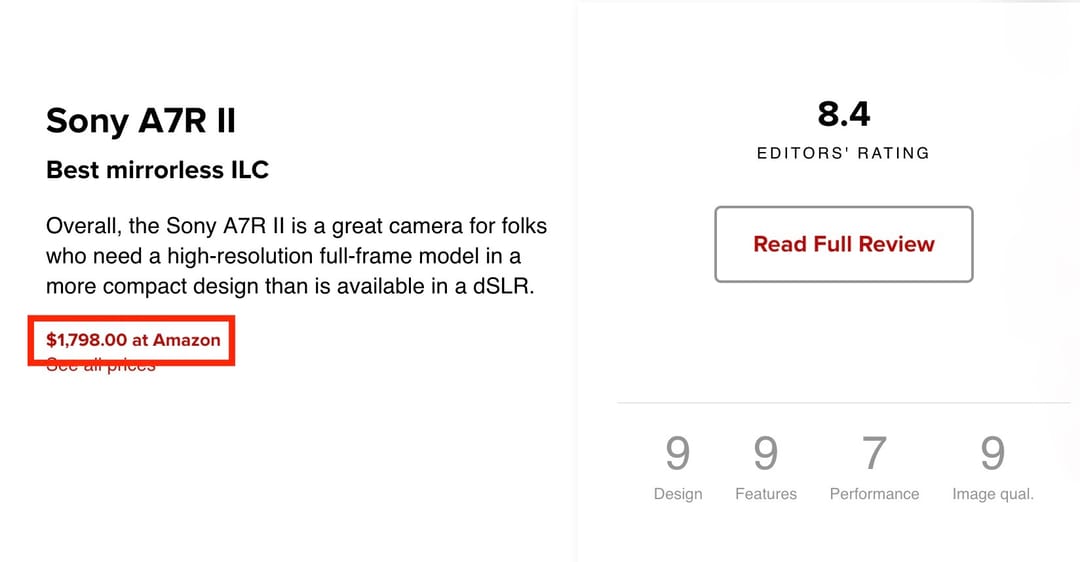
Amazon links are everywhere. Nearly every Amazon link you see on a big site is an affiliate link.
How to Sign Up as an Amazon Affiliate
Once you’ve created a blog with some content and an audience, you can apply to the Amazon Affiliate Program. If you don’t have a real site yet, you most likely won’t be accepted.
After clicking Sign up, you log in with your Amazon account and the site walks you through the rest.
One thing to know upfront: you need 3 qualifying sales within your first 180 days, or Amazon closes your account. You can reapply later, but it’s better to have some traffic before you sign up.
The Rules That Get People Banned
Amazon is strict, and breaking a rule can get your account closed and your earnings withheld. The ones that trip people up most:
- Disclose it. Every site needs to say it earns from Amazon. Amazon wants this exact sentence somewhere people will see it: “As an Amazon Associate I earn from qualifying purchases.” Near your product boxes or at the top of posts with links both work.
- No affiliate links in emails, PDFs or ebooks. Link to a page on your site instead, and put the Amazon link there. Social posts are fine if the account is listed in your Associates profile.
- Don’t type Amazon prices by hand. Prices have to come from Amazon’s API and can’t be more than 24 hours old. More on that below.
- Don’t hide where the link goes or ask people to click your links to support you.
The full list is in the Operating Agreement, and Geniuslink has a good summary of what gets accounts banned.
Writing Affiliate Posts at Scale with AI
One of the hardest parts of growing an Amazon affiliate site is writing enough content to get traffic. You can only write so many reviews and roundups by hand before it feels overwhelming.
AI helps here. You can use ChatGPT, Claude or Gemini to get a first draft. With the RightBlogger AI Article Writer you can draft a full post from a topic or product angle, and the Review Generator takes an Amazon URL and turns the product details into a review draft you can build on with your own experience.
Since writing is so easy now, real photos and videos stand out even more. Show the product in your hands, tell people what you didn’t like, and say how long you’ve used it. That’s the part AI can’t fake.
How to Add Amazon Affiliate Links to WordPress
Start with plain links. You can add live prices once you have some sales.
The simplest way to get an affiliate link is Amazon’s SiteStripe. Once you’re logged in to the affiliate program, you’ll see the SiteStripe bar at the top of every Amazon product page. Click “Text” under “Get Link” to copy your affiliate link.
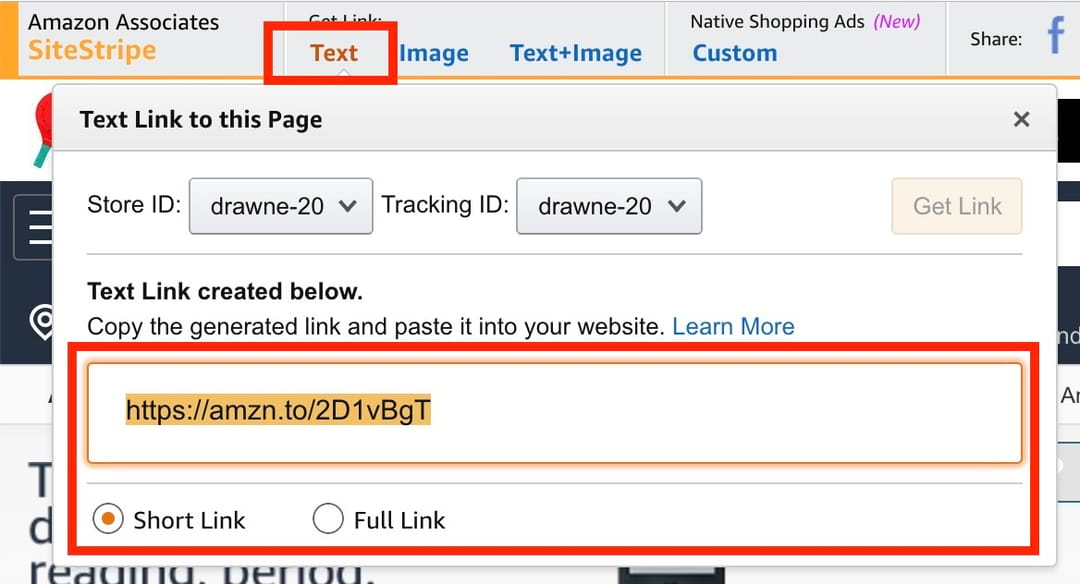
My tracking ID there is “drawne-20”. That’s how Amazon knows the sale came from you.
You can also add your tracking ID to any Amazon URL yourself by adding ?tag=yourtrackingid-20 to the end. For the example above, I’d add ?tag=drawne-20.
Show Live Amazon Prices With the Creators API
Plain links work fine, but product boxes with a photo, the current price and a “Buy on Amazon” button convert much better. To show Amazon prices legally, you need Amazon’s API. As of 2026, that’s the Creators API.
Amazon retired PA-API 5 in spring 2026. Any plugin or code still calling it gets a 403 Forbidden error, and your old access keys don’t carry over. The Creators API does the same job (search products, get prices and availability) with a simpler sign-in.
Who can use it: you need an approved Associates account with at least 10 qualifying sales in the last 30 days for that country’s store. If you go 30 days without a sale, Amazon turns your API access off until sales pick up again. Each country counts separately, so 10 sales on amazon.com doesn’t get you access on amazon.co.uk.
How to get credentials:
- Log in to Associates Central with the main account (not a secondary user).
- Open Tools > Creators API, or go to affiliate-program.amazon.com/creatorsapi.
- Click Create Application and give it a name.
- Click Add New Credential. Copy the Credential ID, Credential Secret and Version. The secret is only shown once.
If you use a plugin like AAWP, paste those into its settings and you’re done. If you’re writing your own code, here’s how it works.
You trade your Credential ID and Secret for a token that lasts an hour, then call getItems with up to 10 ASINs at a time. This is a trimmed version of what I run in WordPress:
// Credentials live in a non-autoloaded option, never in code.
function my_amazon_token() {
	$token = get_transient('amazon_creators_token');
	if ($token) return $token;
	$creds = get_option('amazon_creators_api');
	$r = wp_remote_post('https://api.amazon.com/auth/o2/token', array(
		'headers' => array('Content-Type' => 'application/json'),
		'body'    => wp_json_encode(array(
			'grant_type'    => 'client_credentials',
			'client_id'     => $creds['client_id'],
			'client_secret' => $creds['client_secret'],
			'scope'         => 'creatorsapi::default',
		)),
	));
	$body = json_decode(wp_remote_retrieve_body($r), true);
	if (empty($body['access_token'])) return null;
	// Tokens last an hour; cache it a few minutes less.
	set_transient('amazon_creators_token', $body['access_token'], $body['expires_in'] - 300);
	return $body['access_token'];
}

function my_amazon_items(array $asins) {
	$r = wp_remote_post('https://creatorsapi.amazon/catalog/v1/getItems', array(
		'headers' => array(
			'Authorization' => 'Bearer ' . my_amazon_token(),
			'Content-Type'  => 'application/json',
			'x-marketplace' => 'www.amazon.com',
		),
		'body' => wp_json_encode(array(
			'itemIds'     => array_map('strval', $asins), // up to 10 per call
			'itemIdType'  => 'ASIN',
			'marketplace' => 'www.amazon.com',
			'partnerTag'  => 'yourtag-20',
			'resources'   => array(
				'offersV2.listings.price',
				'offersV2.listings.availability',
				'offersV2.listings.isBuyBoxWinner',
			),
		)),
	));
	return json_decode(wp_remote_retrieve_body($r), true);
}
The price is in itemsResult.items[].offersV2.listings[].price.money.amount. Use the listing marked isBuyBoxWinner, since that’s the price people see on Amazon.
A few things I learned moving my sites over:
- The Version matters. Credentials with a 3.x version sign in through
api.amazon.com(or.co.ukand.co.jpfor those regions) with the scopecreatorsapi::default, as above. Older 2.x credentials use a different token URL and the scopecreatorsapi/default, with a slash. Check which one Amazon gave you. - Keep ASINs as strings. Some book ASINs are all digits, and PHP and JSON will happily turn them into numbers, which breaks the request. That’s what the
strvalis for. - Send your partner tag on every call and use the
detailPageURLAmazon sends back without editing it. That’s how Amazon credits the sale to you and decides your rate limit. - Start slow. For your first 30 days you get 1 request per second and 8,640 a day. One call with 10 ASINs counts as one request, so batch them. After that, the limit grows with the sales you make through API links.
- Refresh the token on a 401. If a request comes back 401, delete the cached token and try once more.
- Dead products show up as errors, not empty results. An ASIN that no longer exists comes back as
InvalidParameterValue, and some products the API won’t expose come back asItemNotAccessible.
Follow the 24-Hour Price Rule
This is the rule that matters most once you show prices. Amazon only lets you show prices that came from its API, and you can’t keep them for more than 24 hours. If you refresh less often than every hour, show the time you got the price along with Amazon’s disclaimer: “Product prices and availability are accurate as of the date/time indicated and are subject to change.”
Page caching makes this sneaky. A price can sit in your WordPress cache and then your CDN cache for hours after you fetched it. Here’s how I handle it on Awesome Stuff To Buy, which has about 1,800 Amazon products:
- An hourly WP-Cron job refreshes the 250 stalest prices (25 calls of 10 ASINs), so every product gets a fresh price about every 7 hours.
- Any price older than 10 hours is never shown. The page just shows the button without a price. That leaves room for page caching and still stays under 24 hours.
- Hovering the price shows when it was fetched and Amazon’s disclaimer.
- Products that have been out of stock for 8 weeks get marked discontinued and drop out of the lists.
You don’t need all of that for a small blog. But if a price is on the page, have a plan for keeping it fresh, or don’t show it.
Or Use a Plugin Instead
If you don’t want to write code, a plugin handles the API calls and price refreshes for you.
AAWP
AAWP is still my favorite Amazon plugin. It grabs product images, prices and details and builds product boxes, comparison tables and bestseller lists. It switched to the Creators API in version 5.0 (January 2026), so make sure you’re on 5.x.
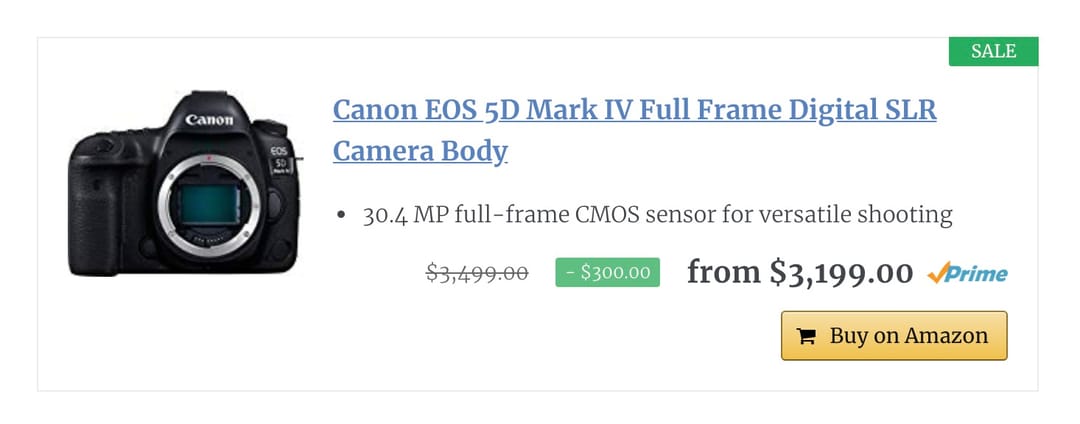
Paste your Credential ID and Secret under AAWP > Settings > Amazon API. If you don’t have 10 sales yet, AAWP has its own data service (the AAWP API) you can use until your Creators API access kicks in. AAWP walks through the setup in its Creators API guide.
WooCommerce for a Store Feel
If you want your site to look and feel like a shop, use WooCommerce. It’s a free plugin that adds product pages, categories and a shop layout to WordPress.
WooCommerce has a product type called External/Affiliate product that links out instead of selling the item yourself. Set the product URL to your Amazon affiliate link and add a featured image.
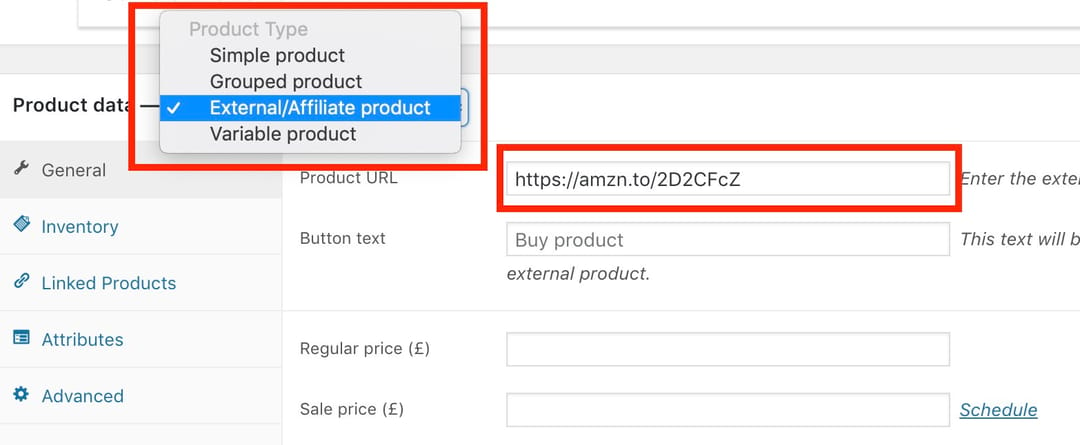
Two things to know. Don’t type Amazon prices into WooCommerce’s price field, since a hand-typed price breaks the 24-hour rule the moment it goes stale. And if you use AAWP, version 5.1.1 added a WooCommerce import that creates these External/Affiliate products for you.
Then use the WooCommerce shortcodes to show your products in posts and pages.
FAQ
How do I add Amazon affiliate links to my WordPress site?
Use Amazon’s SiteStripe. Log in, open a product page, click “Text” under “Get Link,” and paste that URL into your post. For product boxes with images and prices, use a plugin like AAWP with your Creators API credentials.
What is the Amazon Creators API?
It’s Amazon’s API for affiliates to get product data like prices, images and availability. It replaced the Product Advertising API (PA-API 5) in 2026. It uses a Credential ID and Secret from Associates Central instead of AWS access keys.
Does PA-API 5 still work?
No. Amazon retired it in 2026, and calls to it now return a 403 error. You need to create new Creators API credentials, because your old PA-API keys don’t work with it.
Do I need 10 sales to use the Creators API?
Yes. You need at least 10 qualifying sales in the last 30 days for that marketplace. Until then, use SiteStripe links, or a plugin with its own data service like the AAWP API.
Can I show Amazon prices on my site?
Yes, but only prices that came from the Amazon API, refreshed at least every 24 hours. If you update them less often than every hour, show the time you fetched the price and Amazon’s disclaimer next to it.
How much can Amazon affiliates earn?
Most categories pay between 1% and 10%, and a few pay more. What you actually earn depends on your traffic, how well your content matches what people want to buy, and how many of them click through.
Can I use AI tools to help with affiliate posts?
Yes. Tools like ChatGPT, Gemini or RightBlogger can draft reviews and roundups fast. Add your own experience and photos, and double-check every product detail before publishing.
Amazon is a great way to add passive income to a blog, but build traffic first. Then add links, and only show prices once you have a plan for keeping them fresh.
Let me know if you have any questions in the comments!
Slap a sticker on this post

Comments
Loading comments…